


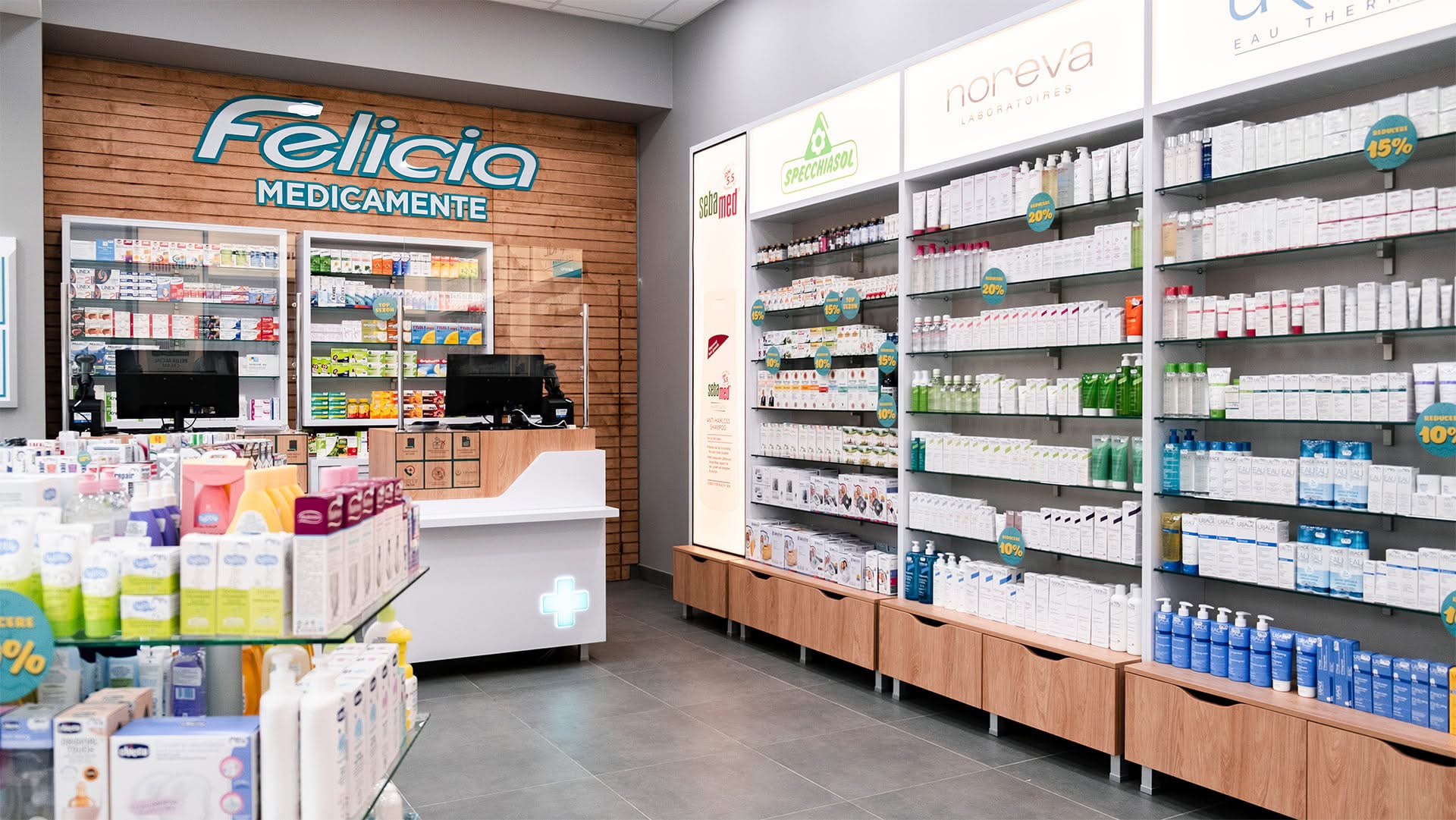

Background and Challenges


Project Goals
Why ABM Assortment
One of the key advantages was the ability to manage the assortment matrix comprehensively: controlling SKU fill rates, analyzing category effectiveness, and reducing the volume of off-matrix inventory.
-
The solution adapts to the specifics of pharmaceutical retail and the company’s real business processes.
-
An important factor in the choice was also the ABM Cloud team’s readiness to respond quickly to requests and refine functionality according to the business’s real needs — the system was implemented as a full-fledged business process management tool.
We appreciate that you are interested in our products. One of our staff will be in touch with you shortly. Have a great day!
How the Implementation Went
Implementing ABM Assortment for Felicia was a phased transformation of the approach to assortment management. The project was structured so that the network continued operating as usual throughout the transition, with results monitored at every stage.
Implementation began with an analysis of current business processes, requirements gathering, and system configuration to match the network’s needs.
A separate stage was dedicated to data preparation and cleansing — the quality of the source data turned out to be one of the main challenges at the start.
A pilot launch was carried out on selected categories and stores, after which processes were adjusted based on the test results.
The solution was scaled to one of the company’s pharmacy networks.
After the first network, the solution began to be scaled across all divisions of the company. The stage started in April 2026 and is ongoing.
The final stages were staff training and the transition to full operational mode.
The project involved category managers, the commercial department, the IT team, the operations division, and company leadership; collaboration was carried out through working meetings, process testing, and regular feedback exchange.
Business Results
Implementing ABM Assortment as part of the ABM Retail Platform helped Felicia move away from manual assortment management. The network transitioned to a systematic, transparent, analytics-based model. The main effect was achieved through process standardization, stronger control over the assortment matrix, and a reduction in manual operations.
-
Assortment management processes became standardized and transparent: decisions are now made based on analytics and data. Control over the assortment matrix improved, assortment manageability increased, and the number of manual operations decreased.
-
Category managers gained clear analytics and a transparent assortment management tool — daily work became faster and more structured, and time spent on manual checks and approvals dropped significantly.
-
Decision-making speed increased significantly: assortment adjustments and matrix changes now require fewer manual approvals.
-
It became easier to make decisions about adding and removing SKUs, redistributing products between pharmacies, adjusting the matrix, and evaluating category effectiveness.
-
In daily work, the most commonly used reports are on SKU fill rate, off-matrix inventory, matrix effectiveness, product availability, and category analysis — these inform operational and commercial decisions.
Frequently Asked Questions
What if the data in the accounting system is incomplete or messy?
Data preparation and cleansing is treated as a separate stage. At Felicia the quality of the source data was the main challenge at the start, and this stage ran from August to December 2024 — before the pilot launch.
Is it necessary to start with a pilot?
At Felicia the pilot ran on selected categories and locations, and processes were adjusted based on the test results. Only after that was the solution scaled across the network.
Does the solution suit a group that operates several brands?
Yes. Felicia brings together pharmacies under the Peon, Salut and Felicia brands — 337 pharmacies and around 15,000 active SKUs. The solution was first scaled to one network, and since April 2026 it has been rolling out across all divisions of the company.
Which reports does the team use in daily work?
Most often — SKU fill rate and out-of-matrix stock reports. The team also analyses matrix efficiency, product availability and category performance, and bases operational and commercial decisions on that data.
Client Testimonial

We appreciate that you are interested in our products. One of our staff will be in touch with you shortly. Have a great day!