


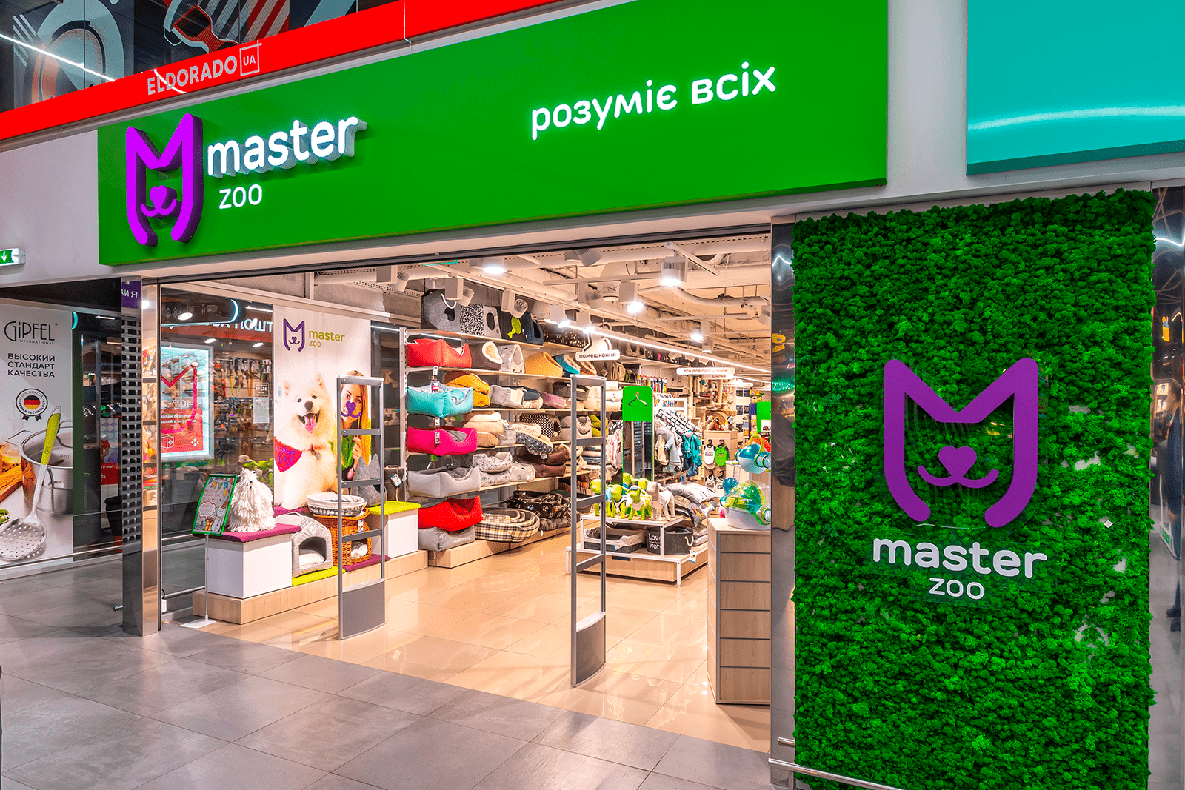
Background and challenges


Project goals
Why ABM Inventory
The assortment matrix sets the categories, the SKU count, and the role each item plays at every store, and ABM Inventory builds its forecasts directly on that matrix. That’s why MasterZoo implemented ABM Assortment first and ABM Inventory second: running replenishment first would optimize the wrong set of products with total precision.
-
ABM Assortment and ABM Inventory connection: ABM Assortment passes SKU statuses and activity to ABM Inventory every day, and orders are generated for exactly what belongs in each store’s live matrix. In return, ABM Inventory feeds goods-in-transit data back, keeping any SKU with stock already en route active automatically. Both systems keep running independently, and the exchange stays invisible to users.
-
Different forecasting periods for different velocity: each product group (slow-, medium-, and fast-moving) gets its own look-back period based on ADU (average daily usage) thresholds calculated by the MasterZoo team. Sharper thresholds let the calculation span a longer period without losing accuracy.
-
Alternative-product mechanism: handles clean SKU rotation.
-
Flexible order settings: safety stocks are tuned per individual store, and orders can be optimized by value or by quantity depending on the category.
How the implementation went
MasterZoo implemented ABM Assortment first, then connected ABM Inventory. Automated ordering was rolled out in stages: data preparation, a pilot, scaling to all suppliers, and adapting calculations to the network’s assortment. Results were assessed roughly a year after replenishment went live.
A replenishment system forecasts demand from past sales and stock movements, so forecast quality depends directly on the quality of historical data. MasterZoo’s commercial team invested extra time up front to hand over clean, verified data. This is one of the key reasons the forecasts held up at scale.
Buyers and category managers learned the new process on real data, while any early issues stayed contained to a small scope.
Over about six months, automated ordering was extended to all suppliers. Until full migration, ABM Inventory ran in parallel with the previous system.
After launch, MasterZoo’s category team ran a detailed analysis of order calculations and calculated additional ADU thresholds for slow-, medium-, and fast-moving products to better reflect the specific sales patterns of its assortment. Since these specific values didn’t yet exist in MasterZoo’s settings, ABM Cloud added the ability to set them, and the two teams worked together to update the system. This combined MasterZoo’s category expertise with ABM Inventory’s capabilities to better align replenishment calculations with the network’s operational needs.
Business results
Comparing Q2 2026 with Q2 2025 across the same store network, roughly a year after replenishment went live, shows that MasterZoo cut lost sales and overstock at the same time, while product availability rose. Fewer empty shelves and less capital tied up in excess stock. These ABM Inventory results run on assortment statuses maintained in ABM Assortment, which delivered its own effects: 2.5x faster assortment matrix updates and 25% fewer out-of-matrix SKUs. Read more in the MasterZoo ABM Assortment case study.
-
Stores trust their orders: store teams accept orders as generated, and the manual check at each location is no longer needed.
-
Less time building orders: category managers spend far less time building orders, especially the first order for a new line.
-
Faster decisions: built-in supplier service-level reporting is always close at hand.
-
Most-used tools: the Lost Sales report, safety-stock adjustment, the promotions module, and a critical-errors panel that flags exceptions before they become stockouts.
Client testimonial

Frequently asked questions
Why did MasterZoo implement assortment management before inventory management?
Assortment defines what to sell, and inventory management determines how much and when. The assortment matrix sets the categories, the SKU count, and the role each item plays at every store, and ABM Inventory builds its forecasts directly on that matrix. That’s why MasterZoo implemented ABM Assortment first, then connected ABM Inventory so every order runs against the store’s live matrix.
How did MasterZoo reduce lost sales with ABM Inventory?
MasterZoo’s category team calculated ADU thresholds for slow-, medium-, and fast-moving products, and ABM Cloud added the ability to set them in the system. Demand forecasting tuned to each product’s velocity and fed by a live assortment matrix replaced single-fixed-period auto-ordering. Year over year (Q2 2026 vs Q2 2025), lost sales fell 37% and availability rose 23%.
How much did MasterZoo reduce overstock?
Overstock dropped 13% year over year, freeing capital tied up in the wrong stock. Availability rose in the same period, so both results improved together.
How do ABM Inventory and ABM Assortment work together?
ABM Assortment defines what each store should sell and passes SKU statuses to ABM Inventory daily. ABM Inventory generates orders only for the active matrix and feeds goods-in-transit data back, keeping items already on the way active automatically. The two run as one connected process.
How long did the ABM Inventory rollout take?
After ABM Assortment went live, automated ordering was scaled to all suppliers over about six months, starting with a controlled pilot on a limited set of stores and suppliers.